
Neurodevelopmental Observations On America’s Two-Party System
In 21st century America, two-party politics may provide a stage on which two neurocognitive lineages negotiate, and sometimes battle, for power and dominance.

I have been busy observing and trying to understand the striking psychological and emotional asymmetries between the two major American political parties, Democrats and Republicans. In my theory, if “politics is downstream of culture,” a phrase most famously associated with Andrew Breitbart, an American conservative commentator, culture may be downstream of neurodevelopment.
In my ongoing research, I have described two broad cognitive frameworks that appear repeatedly in both political and cultural data. They are Homo divergens and Homo sapiens. These are not biological species in the strict evolutionary sense, but psychological archetypes that describe divergent ways of perceiving, reasoning, and relating to the world.
H. divergens refers to individuals whose cognition shows high sensory precision, intense focus, systemic reasoning, and reduced dependence on social cues. H. sapiens, by contrast, has long represented the modal human pattern: socially competent, emotionally attuned, context-sensitive, and guided by communal consensus. Both are fully human, both necessary. They appear to organize governance, knowledge, morality, and belonging in different ways.
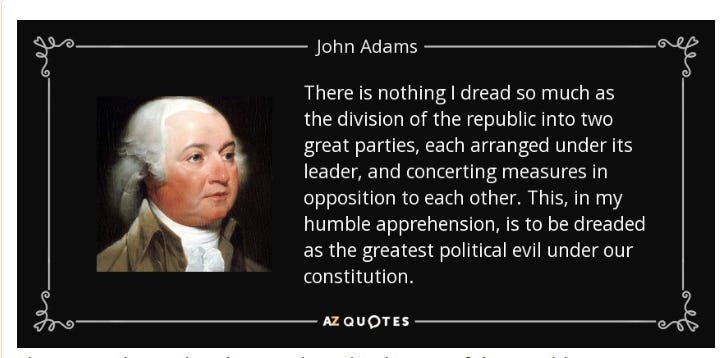
In 21st century America, two-party politics may provide a stage on which these two cognitive lineages negotiate, and sometimes battle, for power and dominance. Each party, through its membership, rhetoric, and policy priorities, appears to embody one cognitive orientation more than the other.
Under this lens, the Democratic Party membership appears to exhibit higher visible representation of H. divergens traits. Surveys of neurodivergent adults show a strong tendency to identify as “Democrat” and “very liberal.” Liberal states, often referred to as “Blue,” also maintain the broadest policy support for neurodiverse individuals. Examples may be insurance mandates for autism coverage, workplace accommodation laws, inclusive education programs, accepted gender re-definition, surgical solutions to gender dysphoria, and an expanding language of diversity and exclusion/inclusion framed in uberanalytic and procedural terms.
The Democrats’ messaging tends to rely on explicit definitions, regulatory frameworks, and appeals to systemic fairness. All hallmarks of the H. divergens cognitive style, checked against my Macro 16 Nation-State Framework and the Micro 16 Individual Framework. In commentaries, its tone often prizes precision, compliance, and expert consensus. Even its emotional register skews more cerebral and emotional: concern for harm, fairness, equality, diversity, and rule enforcement rather than loyalty to country or to the validity of the American experiment.
By contrast, the Republican Party’s core membership resonates, in my view, with H. sapiens markers. It prioritizes intuitive, relational reasoning, often dubbed “common sense,” over procedural analysis. Its moral vocabulary centers on loyalty, authority, and sanctity—the “binding foundations” identified in moral-psychological research. Its communication style values narrative coherence, shared identity, and the emotional resonance of patriotism over uberanalytic qualification. It also appears to value original American thinking, that of the Founding Fathers, versus “imported” ideologies. In policy and culture, this pattern manifests as emphasis on tradition, social cohesion, and moral literalism. In many areas of the Republican milieu, Biblical wisdom, national symbolism, and defense of inherited norms are all expressions of a mind that perceives meaning through communal alignment rather than philosophical abstraction.
As I listen carefully to the parties’ pronouncement and read a large number of commentaries, it seems to me that even the emotional mood of each party core differs very significantly. Democratic communication tends to sound anxious but controlled, self-correcting, and procedural. Republican communication tends to sound confident, visceral, and only partially mediated by expert authority. One resembles the monologue of a problem-solving engineer; the other, the declaration of a tribe defending its God-given boundaries.
It is plain to see, at least this to this observer, that social media magnify these tendencies. Academic studies find that Democrats’ communication tends to focus more on analytical commentary, policy, and calls for acts of “resistance,” while Republicans’ communication more frequently employs emotional storytelling, moral foundations, and collective affirmation. Each amplifies its native cognitive style while filtering out the other’s logic as alien or dishonest. Are the two groups suffering of a severe case of “fear of otherness” syndrome?
I see the same cognitive polarization appear in the structure of some of each party’s policies. H. divergens reasoning favors detailed government regulation, uberprotective social frameworks, and technocratic management of complexity. À la Jean-Jacques Rousseau or even Carl Marx, it views society as a system that, through government control, can be controlled, tuned, and optimized. On the other side, H. sapiens reasoning favors general principles, moral hierarchies, and the preservation of established social roles. It views society as a free, living organism that thrives on shared history, loyalty and cohesion. This polarized view of government may help explain why debates over regulation, education, and health care so often stall at a psychological impasse: each side is speaking from a different cognitive ontology. They simply speak a different language, and translators are hard to come by.
Don’t read what I am saying as implying superiority of one party over the other. Both cognitive types are surviving because they possess adaptive value. H. divergens minds are building systems, uncovering technical possibilities, and advancing the frontier of knowledge. H. sapiens minds sustain culture, maintain social order, and defend shared meaning against fragmentation. I believe that a healthy civilization should be able to accommodate both. The present, highly conflicted moment may be a temporary aberration. There is energy and growth in inter-party cooperation.
Nonetheless, ethnological history shows us that two species can and will fight each other for supremacy. Again, nothing new under the Sun. Homo neanderthalensis and Homo sapiens duked it out, some researchers speculate, over more than a 100,000 years. Ethnologists and other scientists speculate that the last Neanderthals died off around 40,000 years ago, though some evidence suggests a few populations may have survived as late as 28,000 years ago in southern Europe. There was significant tribal warfare but also intermingling, witnessed by the presence of H. neanderthalensis’ DNA in the human genome at the rate of 1.5% to 4%. It is possible that, over the next few hundred thousand years, H. sapiens will face increasing challenges from H. divergens, driving one or the other to extinction.
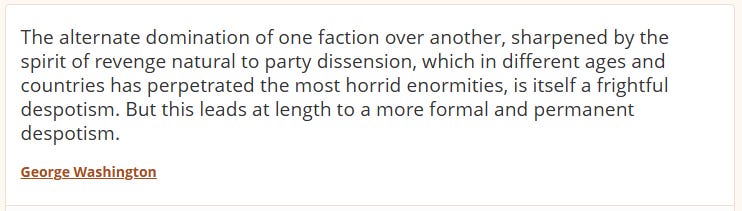
In our time, if either cognitive mode should become politically unchecked by the other, societal pathology may follow. The unchecked party’s rule of a country or a state or province makes it a one-party state or single-party system, where only one is permitted to hold power. For the sake of argument, if American society should become absolutely ruled entirely by H. divergens logic, it could carry the risks of bureaucratic paralysis and the loss of shared myth. A society ruled entirely by H. sapiens intuition would risk anti-intellectual populism and moral absolutism. In my view, large parts of the United States today appears caught between these two gravitational poles, each mistrusting the other’s form of intelligence. Some have suggested that, if certain trends continue, a breakup of the United States into two or more political entities may be the logical consequence. Joe Rogan recently stated on his podcast that the U.S. is “on the way to a bona fide civil war,” a “seven” on his self-described civil-war scale. He cited the public celebration of the assassination of conservative activist Charlie Kirk as a key indicator of deepening partisan divisions and a decline in national morality.
If my H. divergens framework holds water, it invites a different kind of political analysis; one that treats political ideology as a derivative of neurocognitive ecology. Instead of asking who is right and who is wrong, we might ask how these two distinct forms of cognition can continue to coexist within a single political system without, or perhaps on the road to, mutual annihilation. I think the answer should be yes, but recent tragic events give us reason to worry about the outcome of the current struggle.
What if the bitter polarization of our age is not a moral, systemic failure but simply the manifestation of a neurodevelopmental one? What if this civilization is struggling to learn, awkwardly, and to integrate two divergent modes of human intelligence? If so, reconciliation will not come from winning arguments, but from learning how these different kinds of minds can successfully co-construct reality itself. Let’s wish ourselves good luck.